

 Table of Contents
Thematic coding is one of the core skills you'll need to apply many of the 12 proven qualitative data analysis methods—it's the process of labeling segments of data so patterns and themes can emerge across your dataset. Done well, thematic coding transforms messy interview transcripts or open-ended responses into structured, shareable insights your team can actually act on. This practical guide shows you exactly how to approach coding, from your first pass through the data to building a codebook that holds up under scrutiny.
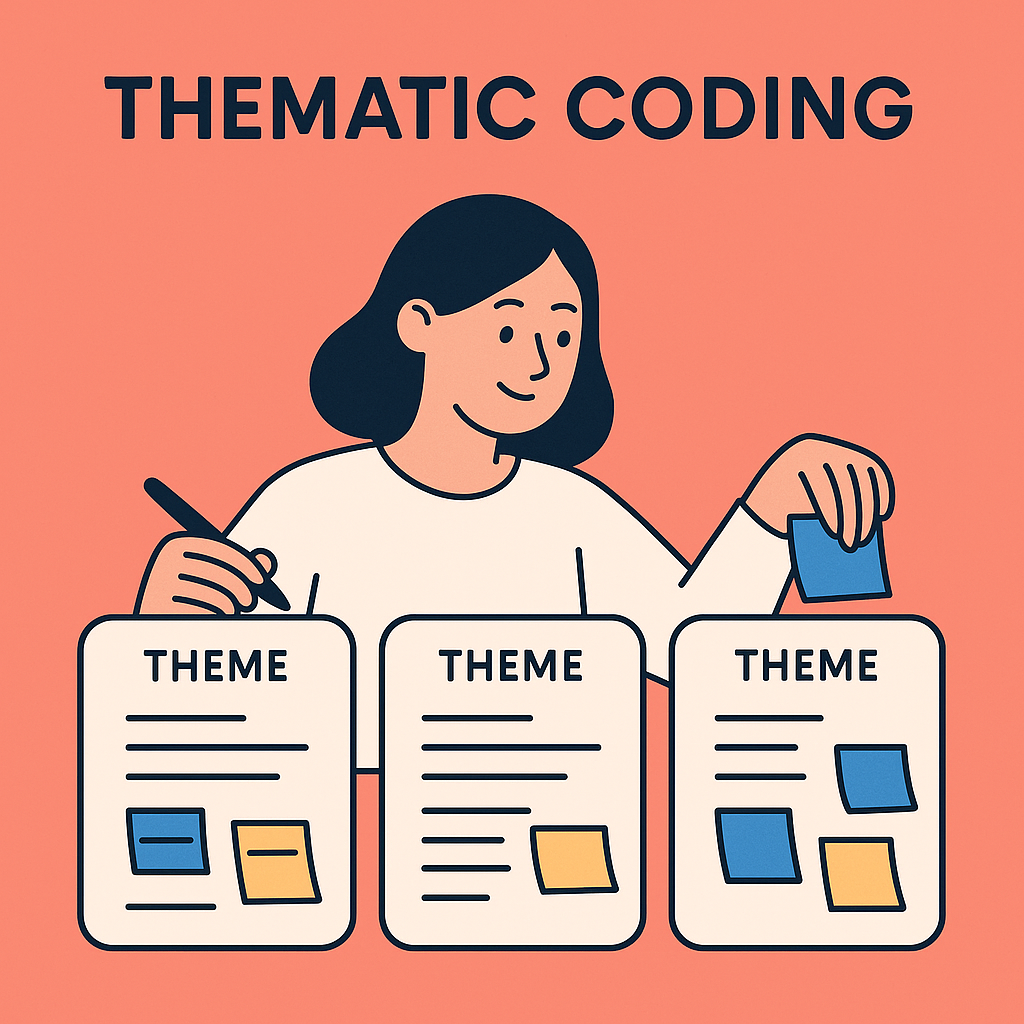
If you’ve ever felt overwhelmed trying to extract meaning from qualitative data, you’re not alone. In this guide, I’ll break down what thematic coding is, how to do it well, and how to avoid common mistakes—whether you’re working in research, product, UX, or marketing.
Thematic coding (also called thematic analysis) is the process of labeling and organizing qualitative data into themes—recurring topics, ideas, or concepts that help you understand what’s really going on beneath the surface. Think of it like clustering quotes or observations into buckets that answer your core research question.
For example, imagine running interviews with users of a meditation app. You might start to notice recurring mentions of:
Each of these can become a code. Over time, similar codes get grouped into broader themes, like “friction in daily routines” or “emotional triggers and barriers to habit formation.”
Without thematic coding, it’s easy to fall into the trap of cherry-picking quotes that “sound good” or reinforce your assumptions. But that approach rarely leads to deep insights or confident decisions.
Well-executed coding allows you to:
In one recent project for a fintech startup, our team analyzed hundreds of user feedback snippets. By coding them systematically, we uncovered a major emotional blocker—fear of making the “wrong” financial decision—that was buried beneath surface-level usability complaints. This insight directly shaped their onboarding experience and content tone.
Thematic coding isn’t just about organizing words—it’s about distilling meaning from raw, messy human expression. Whether you’re a solo researcher or part of a larger insights team, this step-by-step approach will help you go from chaos to clarity without losing the nuance that matters.
Before you dive into coding, set yourself up for success:
💡 Pro Tip:
In one health research project, I skipped cleanup to save time. Big mistake. Inconsistent formatting led to missed codes and confusing rework. Clean data = clean insights.
🛠 Tool Support:
Use tools like Otter, Descript, or UserCall (with AI transcription), but always double-check output—especially for jargon, accents, or overlapping voices.
Before you label anything, get to know your data.
🧠 Why this matters:
You’re training your brain to see patterns. Skipping this step is like trying to write a book report without reading the book.
Now it’s time to start labeling:
✅ Examples:
"I stopped using the app because I felt overwhelmed."
→ Codes: emotional overload, feature fatigue
"I liked that I could get started right away."
→ Codes: quick start, low entry barrier
It’s okay to apply multiple codes to a single excerpt. You’ll refine later.
After coding 20–30% of your data, zoom out:
🧷 Example:
Codes:
Codes:
Aim for 4–8 rich, distinct themes—not 20 surface-level ones.
Now tighten things up:
🤝 Optional:
Have a teammate or stakeholder validate your themes to reduce personal bias and improve clarity.
Time to translate your analysis into insights:
📊 Optional Enhancements:
📝 Example Output:
Theme: Lack of Confidence in First Use
Summary: Many users hesitated to engage deeply with the product due to uncertainty about their ability to use it “right.”
Quotes:
Coding isn’t about labeling text. It’s about listening closely, making meaning, and drawing lines between what people say and what you should do.
If you're tight on time or resources, tools like UserCall can accelerate this process by automatically grouping voice or text responses into initial themes—while you refine and validate them. Think of it as co-piloting, not replacing, your analysis.
✅ Coding too literally
If someone says “It was annoying to register,” don’t just code it as “registration.” Dig into the underlying sentiment: frustration, confusion, unmet expectations.
✅ Over-coding
You don’t need 100 codes for 100 responses. Focus on the codes that truly help you answer your research question.
✅ Ignoring contradictions
Conflicting feedback is not a problem—it’s a signal of different personas, contexts, or unmet needs. Explore them.
✅ Forgetting the “so what?”
Always ask: What decision will this theme inform? If a theme feels interesting but useless, it might be a rabbit hole.
✅ Ignoring your own bias
Every coder brings assumptions into the room. Keep a short reflexive memo noting where your own interpretation might be shaping the codes you're seeing — see our Braun & Clarke reflexive thematic analysis guide for how to build this into your process.
In a study for a language learning platform, early thematic analysis surfaced lots of “I forgot” comments from churned users. At first, the team interpreted it as a need for reminders. But digging deeper, the coded themes pointed to “low perceived progress”—users didn’t feel like they were improving, so they stopped caring.
The fix? A redesigned dashboard that made micro-progress more visible. Retention improved 12% in the next quarter.
Thematic coding isn’t just a method—it’s a mindset. You’re not tagging text for the sake of it. You’re listening closely, labeling thoughtfully, and building a bridge between voices and action.
Whether you’re analyzing five interviews or five thousand survey responses, this approach will help you get from noise to narrative, faster and with more confidence.
Want to save time on coding and scale your qualitative research? Check out UserCall—our AI-moderated voice interview platform that turns conversations into thematic insights, automatically.
Thematic coding is just one piece of the qualitative analysis puzzle—explore the full range of qualitative data analysis methods to see which combination works best for your research. Want to cut the time you spend coding interviews in half? Try Usercall and let AI handle the heavy lifting.
A strong coding process deserves equally strong tooling. Explore our guide to the top thematic analysis coding software available today, or try Usercall to see how AI-moderated interviews and structured analysis can make your entire qualitative workflow faster and more defensible.
Once you've got a coding process that works, the next lever for speed and consistency is your software. Compare options in our roundup of the top 5 qualitative data analysis tools that actually work to see which ones fit a thematic coding workflow best.
Related: the 7-step thematic analysis coding method · Braun & Clarke's exact 6-step process · how to turn codes into a usable codebook
