
 Table of Contents
Most teams don’t fail at weekly user interviews because they lack discipline. They fail because they treat interviews like a calendar ritual instead of a system. After about three weeks, recruitment dries up, insights repeat, and the team quietly abandons the whole thing.
I’ve watched this happen inside a 40-person B2B SaaS company where we committed to “five interviews a week.” By week four, we were down to one interview with a friendly power user who told us nothing new. The issue wasn’t effort — it was that we built a schedule, not a pipeline.
Consistency without infrastructure collapses. Teams assume that if they block time on the calendar, insights will follow. In reality, weekly interviews depend on three moving parts: a steady participant pipeline, evolving research questions, and a way to synthesize quickly.
Miss one, and the system stalls. Recruitment is the first to break. You burn through your easiest participants in two weeks, then scramble. By week five, you’re either re-interviewing the same users or lowering your bar just to hit the quota.
The second failure point is stagnation. Without a mechanism to refresh questions, interviews become repetitive. I’ve seen PMs ask the same script for six weeks straight, hoping for new answers. They don’t come.
Finally, synthesis becomes the silent killer. If insights pile up without decisions attached, stakeholders disengage. Weekly interviews start to feel like theater instead of progress.
If you want this to work, you don’t need more discipline. You need a system that feeds itself.
The shift is from scheduling interviews to managing flow. You’re not trying to “do research weekly.” You’re trying to ensure users, questions, and decisions move continuously.
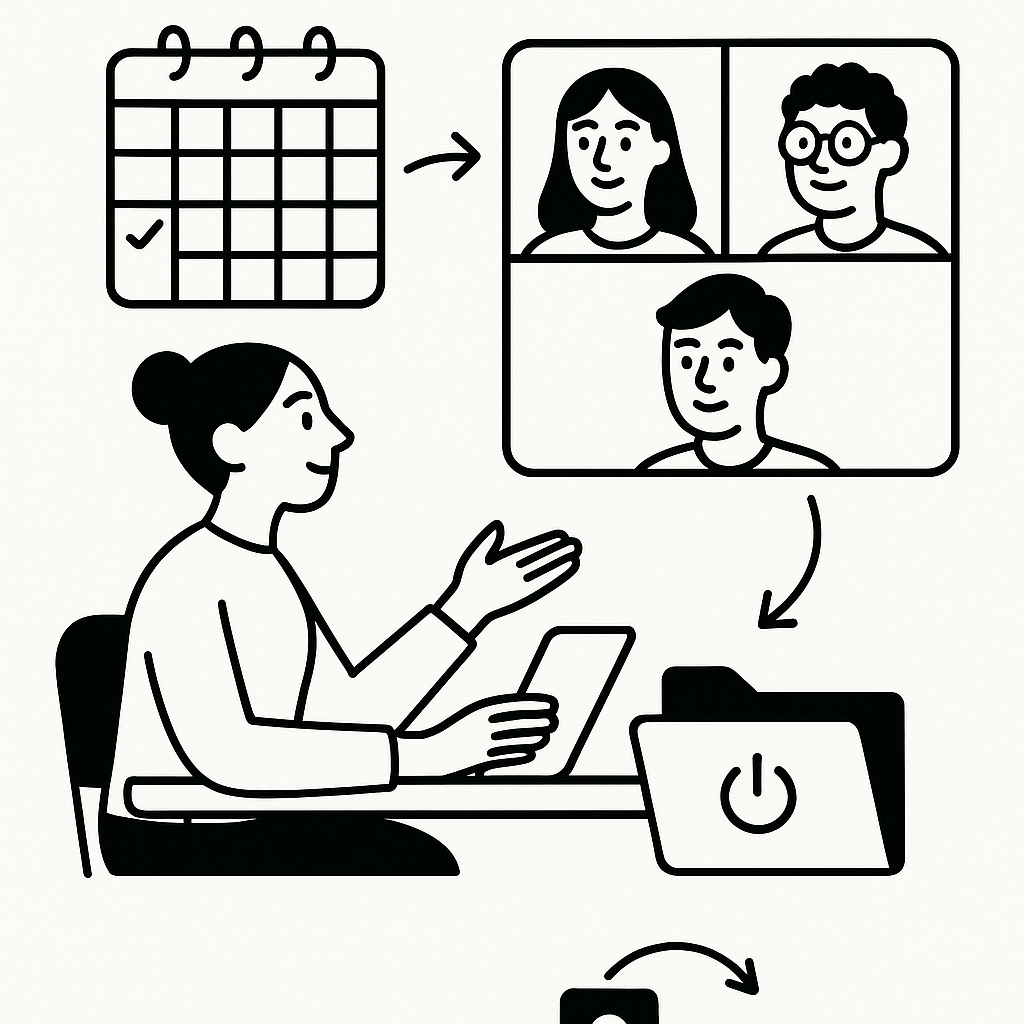
I structure this as three parallel tracks running every week: recruiting, interviewing, and synthesizing. Each track feeds the next. If one slows down, you fix that track — not the whole system.
At a Series B product team I worked with (PM, designer, and one researcher supporting four squads), we moved from ad hoc interviews to this pipeline model. Within six weeks, we went from 3–4 interviews per month to 12–15 per week across teams, without hiring more researchers.
The key change wasn’t volume — it was that no single week carried the full burden. Recruitment happened continuously. Questions evolved weekly. Synthesis was lightweight and immediate.
If you’re still treating interviews as isolated sessions, you’re doing too much work every time.
The best recruiting channel is your product itself. Email blasts and panel tools are fine, but they don’t scale for weekly cadence. You need a system that surfaces the right users at the right moment.
One of the highest-leverage changes I’ve made is adding intercepts tied to behavior — not demographics. For example, trigger an invite right after a user abandons onboarding or completes a key action.
At a fintech app (~200k MAU), we embedded intercepts at three points: failed KYC verification, first successful transaction, and account dormancy at 14 days. Within two weeks, we had more qualified participants than we could schedule — without sending a single outbound email.
This is where tools like Usercall are genuinely useful. You can trigger AI-moderated interviews at those exact product moments and capture the “why” immediately, instead of chasing users later when context is gone.
If you want a deeper breakdown, this is covered well in how to recruit participants for user interviews, but the core idea is simple: recruitment should happen whether or not you have interviews scheduled.
Static scripts kill continuous discovery. If you ask the same questions every week, you’re not learning — you’re confirming.
I treat each week as a new iteration cycle. Monday: review last week’s insights. Tuesday: adjust the discussion guide. Wednesday–Friday: run interviews with that updated focus.
At a B2B analytics platform (PM + designer pairing), we tracked one core theme per week — onboarding friction, dashboard comprehension, pricing perception. This constraint forced us to go deeper instead of broader.
By week three, we weren’t just hearing problems — we were testing hypotheses live. That’s when interviews stop being exploratory and start influencing decisions.
If you need a baseline structure, the user interview playbook is a solid reference. But don’t treat it as a script. Treat it as scaffolding you rebuild every week.
If insights take longer to process than to collect, you will burn out. Weekly interviews generate a surprising amount of data. If you wait for a “proper” analysis cycle, you’ll fall behind within two weeks.
The fix is to lower the fidelity of synthesis, not raise it. You don’t need a 20-slide deck. You need sharp, immediate outputs tied to decisions.
In one team (three PMs, one researcher), we implemented a same-day synthesis rule: every interview produced three outputs within two hours — key insight, supporting quote, and recommended action. That was it.
This is where AI can actually help, if used correctly. With AI-moderated interviews, you can automate transcription, tagging, and theme extraction — but you still need a human deciding what matters.
Tools like Usercall push this further by structuring interviews and analysis together, so you’re not stitching together Zoom recordings, notes, and spreadsheets. That’s the difference between keeping up and quietly quitting after a month.
Interviews are only valuable if they change what you build. Weekly cadence is just a means to that end.
The teams that succeed don’t celebrate “we did five interviews.” They point to decisions: we changed onboarding copy, we killed a feature, we doubled down on a use case.
I saw this clearly at a growth-stage SaaS company where interviews were tied directly to sprint planning. Every Friday, the team reviewed that week’s insights and made at least one product decision based on them. No decision, no point.
This is the core of continuous product discovery: a tight loop between user input and product output. Weekly interviews are just the input layer.
If your system doesn’t end in decisions, it’s just research theater.
You shouldn’t be reinventing your research process every week. The goal is to invest upfront in a system that makes weekly interviews inevitable, not effortful.
That means embedding recruitment into your product, evolving your questions weekly, and keeping synthesis brutally simple. Once those pieces are in place, the system sustains itself.
The biggest mindset shift: stop asking “how do we run interviews this week?” and start asking “what part of the system is breaking?” Fix that, and the cadence takes care of itself.
Once your always-on system is recruiting and running interviews every week, the next challenge is asking questions that actually surface new insight instead of recycling the same themes. Our guide on writing qualitative research questions breaks down 45+ examples you can adapt for recurring interview cadences. If you're ready to automate parts of this workflow, Usercall can help you run consistent, AI-moderated sessions at scale.
Related: running high-quality customer interviews at scale · semi-structured interview guide · conducting research interviews that avoid polite answers
