
 Table of Contents
Market research focus groups haven’t died because they’re useless. They’ve survived because they’re genuinely good at one narrow job: surfacing social reactions in real time. The problem is that most teams still use them for jobs they’re bad at—understanding individual decision-making, diagnosing friction, or predicting behavior—and then wonder why the findings feel theatrical and thin.
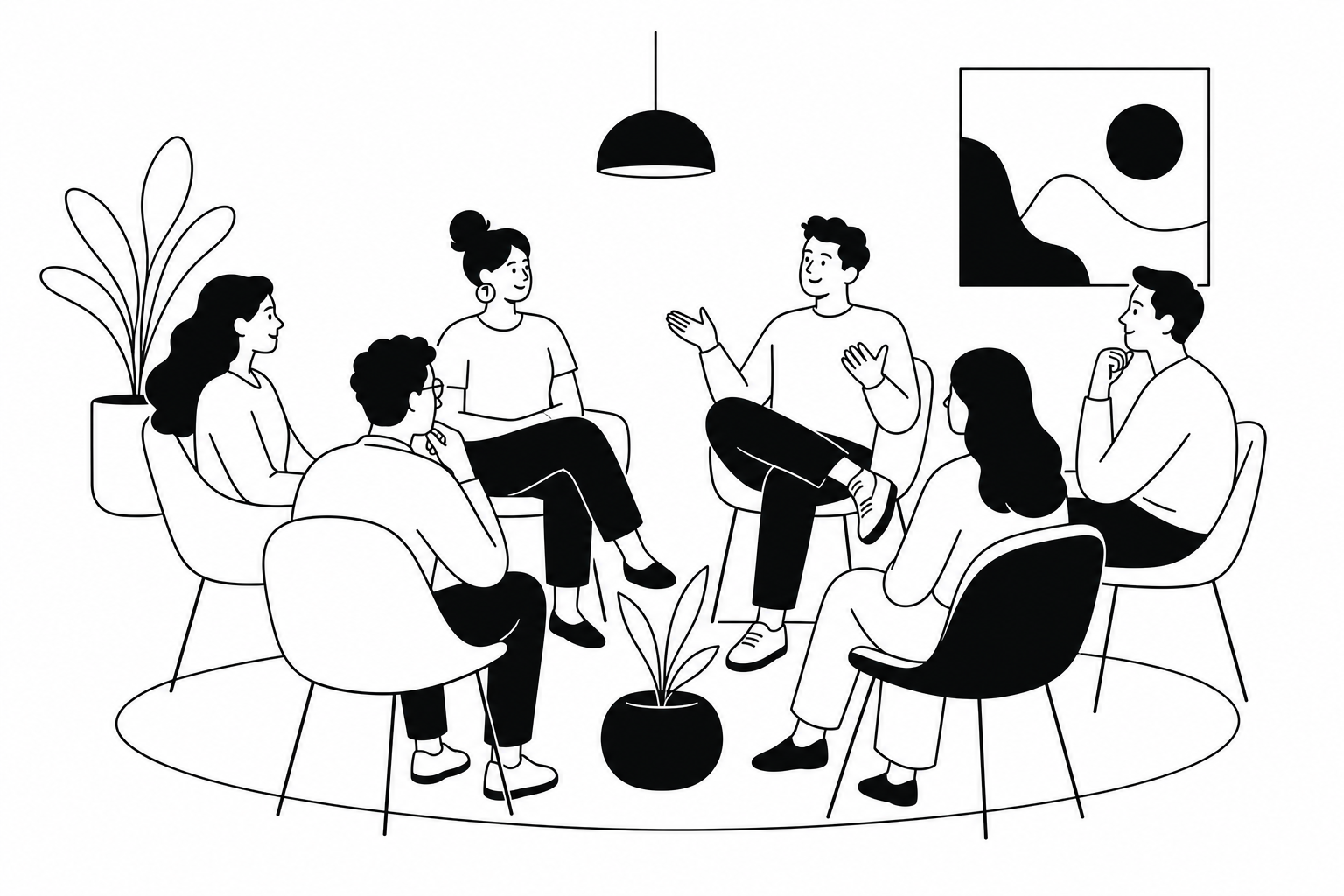
Most focus groups fail because group dynamics distort the very thing teams think they’re measuring. You don’t get clean individual opinions; you get negotiated opinions. The loudest person frames the discussion, the most socially aware participant softens their view, and half the room starts performing “good consumer” instead of telling you what they actually did.
I’ve watched this happen in categories from fintech to CPG. A participant says they “always compare options carefully,” three others nod, and suddenly the room is full of highly rational shoppers who somehow still abandoned carts, forgot renewal dates, or bought whatever was on the endcap. People narrate themselves differently in groups than they behave alone.
The operational downside is just as bad. Recruiting 8 people to show up at one time, getting a moderator, observer room, discussion guide, incentives, and analysis lined up often takes 2–4 weeks. For many product and insights teams, that means the decision has already been made before the “insight” arrives.
One example still sticks with me. I was leading research for a 12-person product team at a B2B SaaS company testing onboarding messages for a workflow tool. We ran two focus groups because leadership wanted “live reactions,” but what we got was a masterclass in conformity: one ops manager declared a feature “too advanced for new users,” and the rest of the group spent 30 minutes debating complexity instead of admitting they were confused by our terminology. When I followed up with 1:1 interviews, the real issue was obvious—users didn’t understand when the feature would help them, not whether it was advanced.
Focus groups are useful when collective sense-making is exactly what you need to observe. If you want to know how people react to a campaign, package, brand promise, or culturally loaded message in a social setting, a group can be the right instrument. That’s especially true when peer influence is part of the market reality.
They also help when you need language variation fast. A good moderator can surface competing framings, emotional triggers, and instant pushback in a single session. For early message exploration, that can be efficient.
The catch is that you need to stay honest about the output. A focus group can tell you what people will say around other people. It usually cannot tell you, with much precision, why one person churned, why a signup stalled, or why someone ignored your feature three times before adopting it.
I used focus groups effectively with a seven-person consumer insights team at a food brand during a packaging refresh. The constraint was brutal: legal needed copy direction in 10 days, and retail partners wanted confidence that the new front-of-pack language wouldn’t trigger confusion. In that case, the group dynamic was the point—we needed to hear what claims people challenged publicly and which phrases gained immediate social approval. We got a clear answer: “high protein” landed, “functional fuel” sounded fake, and we changed copy before print.
The real mistake isn’t running focus groups. It’s running them without a decision-method fit. Before choosing any method, I ask one question: what decision will this research actually change? If the answer is fuzzy, the method choice will be fuzzy too.
For product and growth teams, most urgent questions are individual, contextual, and behavioral. Why did users drop at activation step three? Why do trial users say the product is easy, then never come back? Why does a concept sound appealing in theory but fail when someone imagines using it on a Tuesday afternoon?
Those are rarely group questions. They’re much better answered through 1:1 interviews, diary methods, intercept-based feedback, concept testing, or AI-moderated qualitative research that can reach more users quickly without flattening nuance. That’s why I increasingly recommend tools like Usercall when teams need depth and speed together: AI-moderated interviews with researcher controls let you probe specific moments, and product intercepts can trigger at high-intent or high-friction events so you capture the “why” behind the metric while it’s still fresh.
If your team is evaluating newer methods, I’d start with AI focus groups and broader AI market research approaches—not because AI is trendy, but because the old bottlenecks are real. Recruiting and moderation overhead have hidden costs, and they push teams toward tiny samples and overconfident conclusions.
I saw this shift firsthand with a 20-person product growth team at a subscription app. They were losing users between install and first value, and the instinct from leadership was to run focus groups on “perceptions of onboarding.” We instead triggered post-dropoff interviews and AI-moderated follow-ups tied to exact product events. The result wasn’t a better opinion; it was a better diagnosis: users weren’t resistant to setup, they didn’t trust the permission request timing. Conversion improved 14% after changing the sequence.
Focus groups often become a crutch for unclear research design. Teams say they want “reactions,” but what they really need is evidence they can act on. That means tightening the question, the sample, the trigger moment, and the output format before anyone schedules a session.
Here’s the standard failure pattern I see: broad objective, mixed participant criteria, overloaded discussion guide, then a debrief full of themes everyone already suspected. You spend thousands to confirm intuitions and still can’t prioritize the next move.
A stronger design looks narrower. If you’re testing concepts, use sharper prompts and comparative questions; this guide to concept testing questions is a better starting point than a generic group discussion. If you’re choosing external support, be careful—many firms sell polished decks instead of decision-changing research, which is why I’m blunt about how most consumer insight consultancies underdeliver.
The research teams that move fastest don’t worship any one method. They build a system: behavioral data to spot the problem, qualitative depth to explain it, and repeatable analysis to see whether the pattern is real or anecdotal. That’s a much stronger setup than trying to squeeze every question through a two-hour group discussion.
Market research focus groups still deserve a place in the toolkit—but a much smaller one than most teams give them. Use them when social influence is central to the question: ad reactions, packaging language, shared cultural meaning, or group debate. Don’t use them as your default for product decisions, journey friction, or behavior diagnosis.
If I had to reduce this to one rule after a decade of research, it’s this: choose the method that preserves the truth you’re trying to measure. Groups are good at showing public sense-making. They are bad at revealing private confusion, silent hesitation, and in-the-moment behavior—the very things most modern product and insight teams need to understand.
That’s why so many teams are moving on. Not because focus groups are obsolete, but because better tools now exist for the harder questions.
For a deeper look at exactly where this method breaks down and what to use instead, our focus group research guide walks through the full picture. When you need faster, more candid customer input than a traditional panel can deliver, Usercall's AI interviews are built for that gap.
Related: market research focus groups: why they fail · market research and focus groups: stop paying for polite answers · research and focus groups: the brutal truth
