
5 Best Outset Alternatives in 2026 (Honestly Compared)
AI-moderated enterprise research platform (sales-led)
Choose Outset when you want custom enterprise plans, video interviews and setup help from the Outset team. Choose Usercall when you want to start today from $89 a month, with a 4M+ panel or your own users.
Outset is a professional-grade AI-moderated research platform: video, voice, or text interviews, 40+ languages, recruitment via Outset or your own list, instant synthesis, and a sales-led subscription with onboarding. It is not a $89 self-serve tool, and it is not qualitative-analysis software in the NVivo sense. If you are leaving because you want another enterprise study engine, start with Listen Labs or Strella; if you want public pricing and a codebook you can edit, start with Usercall.
Enterprise research ops, or start without a demo?
Outset’s motion is sales + onboarding. Some alternatives keep that model; some do not.
Who finds the people?
Outset, Listen Labs and Strella sell recruiting as part of the product, and Conveo works with panel partners. With Usercall, we can recruit participants for you, or you can bring your own.
Can you edit the analysis?
Outset auto-tags themes and lets you chat with data. That’s not the same as a researcher-owned codebook. If you need merge/split/audit, look at Usercall.
Voice-only vs video/multimodal
Outset is multimodal. Several cheaper alternatives are voice- or chat-only.

Self-serve interviews plus analysis you can edit. No demo. Self-serve from $89 a month. Your first interview is free. No sales call. see all plans.
See how Usercall runs AI-moderated interviews. You can edit the codebook. Interviews run in 50+ languages. You can listen to real sample interviews. It also fits AI concept testing.
Usercall is a self-serve platform for AI-moderated 1:1 voice interviews and researcher-controlled thematic analysis: edit the codebook, merge or split themes, and audit the AI with every theme linked to a source quote. People use the analysis for product interview programs and for academic and thesis work.
- ✓ Self-serve, published pricing. No plan conversation required, unlike Outset
- ✓ Researcher-controlled thematic analysis (editable codebook, merge/split, audit) where Outset only synthesizes and chats with data
2. Listen Labs
Outset-like scale with the largest published respondent network
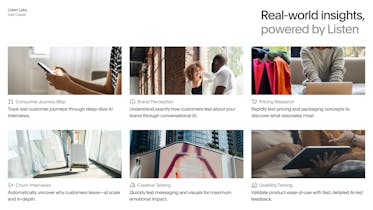
Listen Labs publishes a 50M+ possible-respondent network, 120+ languages, and a study design, recruit, interview, and boardroom-deliverables workflow with a compounding workspace. It is not a self-serve product, and pricing is opaque (listenlabs.ai/pricing 404s; CTA is Demo / Sign in). Choose it for a discrete study when you need people recruited for you. It is not built for interviews that start inside your product.
- ✓ 50M+ respondent network vs Outset’s 1.1B+ possible-but-unverified reach, with 120+ languages published
- ✓ A recruit-to-deliverable workflow built for insights orgs replacing Outset
3. Strella
Panel + video + highlight reels, still a demo away
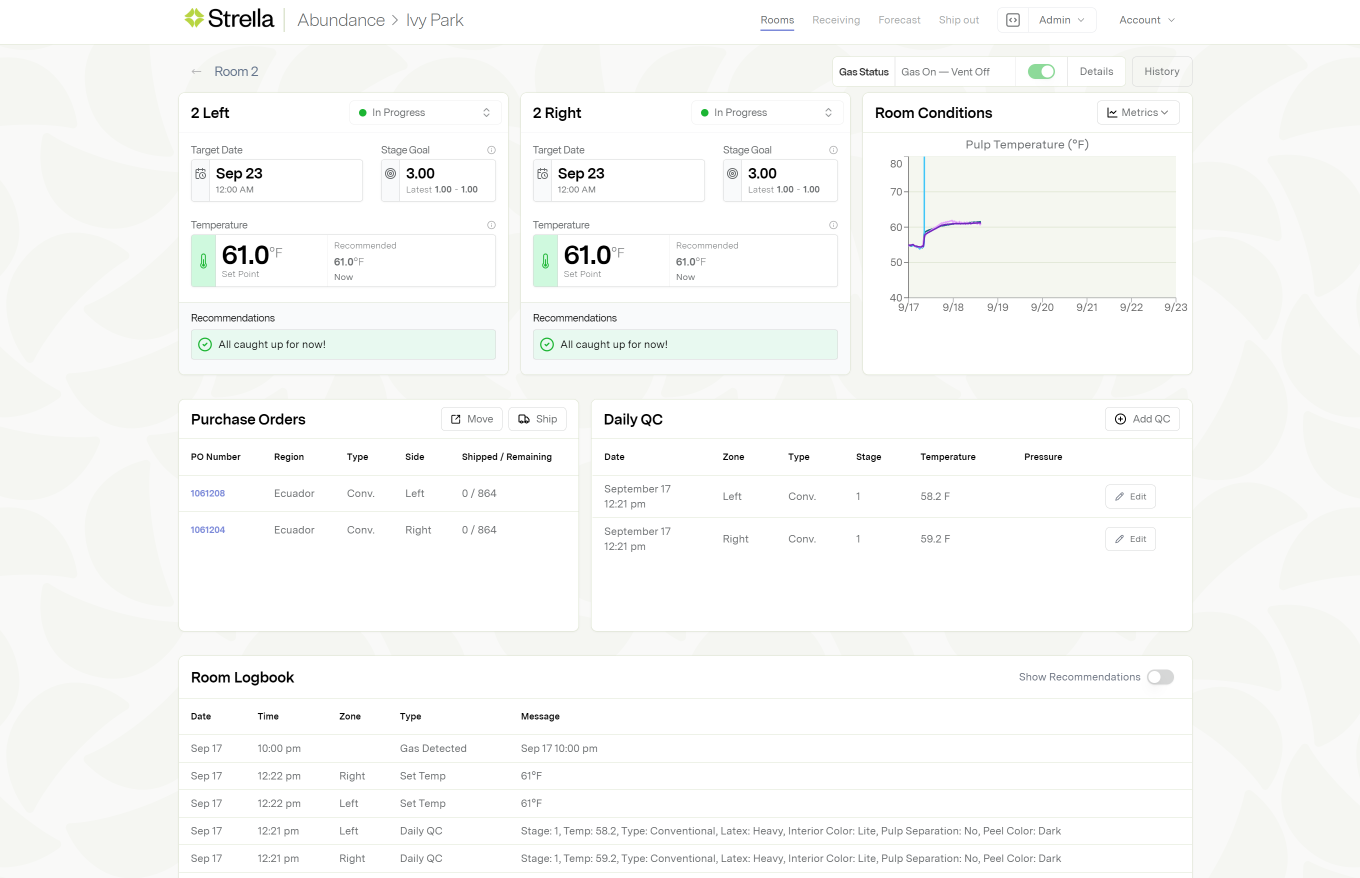
Strella is explicit about usability, concept, and mobile testing with screen and video recording, embedded stimuli, and "your customers or our panel" (up to 8M people). Unlimited users and SOC 2 / GDPR are listed, but there is no public price. The CTA is Book a demo.
- ✓ Screen and video recording plus embedded stimuli that Outset does not break out as a distinct workflow
- ✓ Human-moderated interviews available alongside AI-moderated, in the same platform
4. Conveo
A research partner, with experts on your study
Conveo's AI moderator interviews real people, and its research experts help design and run studies. It offers methods like AI-moderated MaxDiff and voice, video, tone and behavioral analysis, and lists SOC 2, GDPR, ISO 27001 and ISO 27701. It is a peer to Outset more than a cheaper swap.
- ✓ Public agency pricing, where Outset needs a custom quote
- ✓ Methods like MaxDiff and tone analysis inside the interview
Planned depth studies, paid per interview
User Intuition runs AI-moderated interviews by voice, video or chat. You can use your own people, or it can recruit from its own panel, which it says has 4M+ people in 58 countries. It says interviews run 20 to 30 minutes and every finding links to a quote and a recording. Pricing is public: $30 per voice interview with your own people, or $60 with its panel, and no monthly fee. It is built for planned studies, not interviews that start inside your product.
- ✓ Public, per-interview pricing, where Outset is custom-quoted
- ✓ Its own panel, plus your own people, without a sales call
Want interviews that start at the moment someone uses your product, or analysis you can edit? That's Usercall.
Outset vs Conveo
Outset and Conveo are both sales-led research platforms. Outset is the custom-quoted option: text, voice, video and voice-to-voice interviews, 40+ languages, and setup help from the Outset team. Conveo puts research experts on the study. It lists methods such as AI-moderated MaxDiff, plus voice, video, tone and behavioral analysis. It also lists SOC 2, GDPR, ISO 27001 and ISO 27701.
Price is the clearest split. Outset does not publish a number. Conveo's agency hub lists $5 per interview minute for the first 1,500 minutes in a study, then $2, with $5,000 in credits upfront. Enterprise plans still go through a demo.
Pick Conveo when you want those methods and a public agency rate. Pick Outset when you want the Outset team to set the study up. If you want to start today without a demo, and edit the themes yourself, that is Usercall.
Yasna, if the study is a conversational survey
Yasna is for teams that want standardized questions plus open-ended follow-up. It suits brand, employee experience, or customer experience measurement. Pricing is custom. It is a conversational survey, not a discovery interview. If the decision depends on unpacking a workflow, use a dedicated interview tool.
| Feature | Usercall | Listen Labs | Strella | Conveo | Outset | User Intuition |
|---|---|---|---|---|---|---|
| Self-serve vs sales | Self-serve. No demo. | Demo/sign-in; no public price | Book a demo; no public prices | Book a demo or start for free; agency hub | Sales-led, custom plan + onboarding | Self-serve; demo available |
| Starting price (public) | Lite $89/mo ($899/yr) | Not publicly listed | Not publicly listed | Agency: $5/min, $5,000 credits upfront | Not publicly listed | $30 per voice interview ($60 with its panel), no monthly fee |
| Panel vs BYO | We recruit for you (4M+ panel), or you bring your own | 50M+ network, or your list | Panel of up to 8M, or your customers | Panel partners, or your own audience | Via Outset or BYO; 1.1B+ possible, 85+ countries | Its own panel (says 4M+ in 58 countries), or your own |
| Voice vs video/text | Voice-first; text + screen-based | AI interviews; screen share | AI or human-moderated; screen + video | Voice and video; MaxDiff, tone analysis | Text, voice, video, voice-to-voice | Voice, video and chat |
| Analysis | Editable codebook, merge/split, source-linked quotes | Deliverables + compounding workspace | Real-time synthesis, verbatims, repository | Research experts plus stakeholder-ready reports | Auto-tagged themes, chat with data; not QDA software | Findings linked to the quote and recording |
| Interview length | 12 / 25 / 45 min by plan, up to 1 hour on request | Not published | Not published | Not published | Not published | 20 to 30 min (its own figure) |
| Languages | 50+ | 120+ | 46+ | Not stated | 40+ | 80+ (its own figure) |
What is the difference between Usercall and Outset?
Outset is a sales-led, custom-priced AI-moderated research platform for enterprise teams (video/voice/text, 40+ languages, recruitment via Outset or BYO, SOC 2 Type II / HIPAA / GDPR). Usercall is a self-serve platform from $89/mo for AI-moderated 1:1 voice interviews plus researcher-editable, source-linked thematic analysis. Outset fits large, multimodal studies better; Usercall fits teams that want to start without a demo and own the codebook. Compare Usercall vs Outset.
Does Outset have public pricing?
No. Outset’s pricing page describes custom plans and a dedicated onboarding call. Treat pricing as sales-led.
What are the best Outset alternatives in 2026?
The five we could verify are Usercall (self-serve interviews plus analysis you can edit), Listen Labs (enterprise teams that need recruiting), Strella (a panel and a sales-led motion), Conveo (a research partner with experts on your study, more a peer to Outset than a cheaper swap) and User Intuition (planned depth studies, paid per interview).
Is Usercall cheaper than Outset?
Usercall publishes $89 / $199 / $399 per month; Outset does not publish a number. For a team that can bring its own participants, Usercall is the lower, known line item. For a team that needs Outset’s recruitment, video, and certifications, the all-in Outset contract may still be the right spend.
Can Usercall replace Outset for academic qualitative analysis?
Outset is not an NVivo competitor. Usercall is used for researcher-controlled thematic analysis (editable codebook, source-linked quotes), including academic and thesis / PhD work, as well as product interviews.
Does Usercall include a participant panel like Outset or Listen Labs?
Yes. We can recruit participants for you, or you can bring your own. Our panel has 4M+ people. If you need an even bigger panel, Listen Labs (50M+) and Strella (up to 8M) are worth a look.
Keep reading