

 Table of Contents
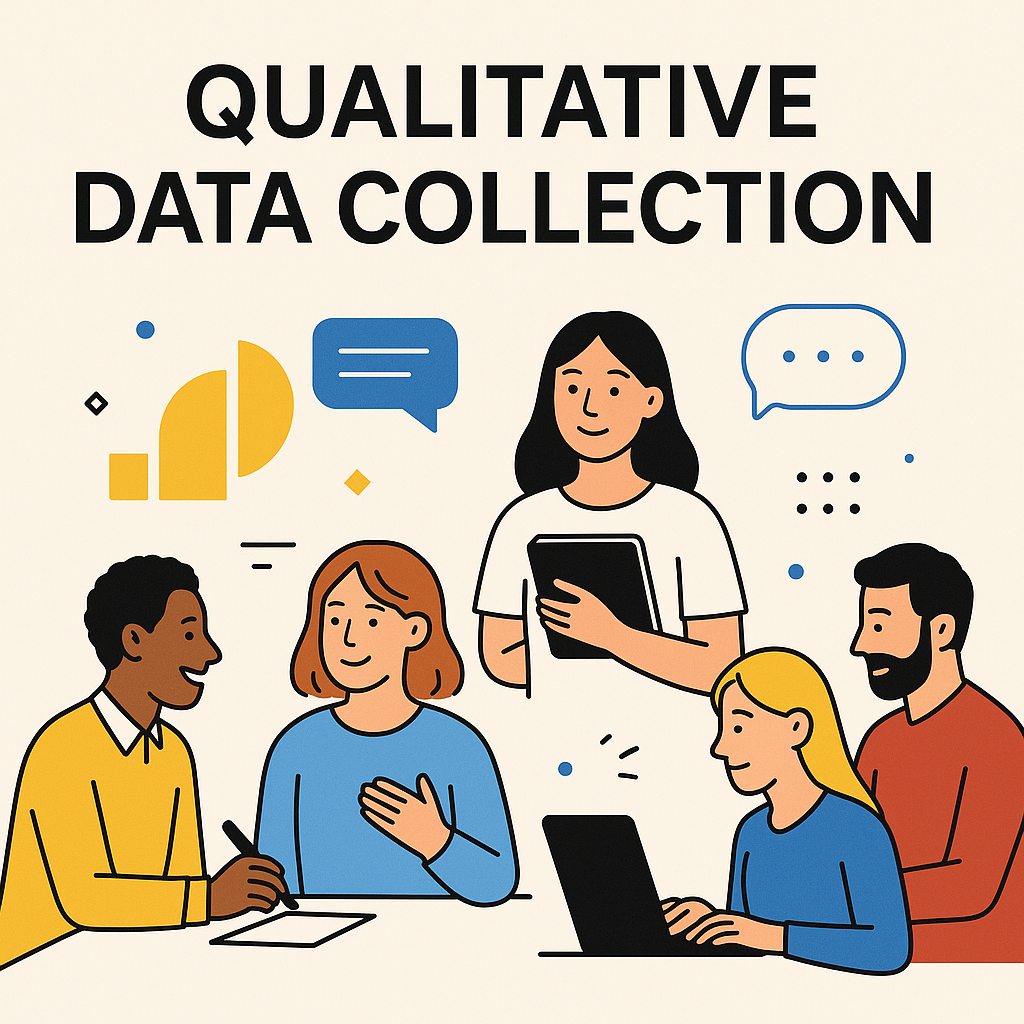
Quantitative data tells you what happened—but qualitative data reveals why it happened: the emotions, motivations, and real experiences that shape decisions. In a world increasingly driven by nuanced user needs, mastering qualitative methods is essential to creating products and experiences that truly resonate.
What It Is:A structured or semi-structured conversation between a researcher and a participant, designed to explore deep, personal insights into behaviors, decisions, needs, and beliefs.
How to Do It Well:
Pro Tip:After 5-10 interviews, patterns often emerge. This is when themes can be coded and used to inform design, messaging, or business strategy.
What It Is:Structured discussions with 6–8 participants, facilitated by a moderator. Useful for testing ideas, language, brand perceptions, and product concepts in a group context.
How to Do It Well:
Remote Execution Tips:
Use Case Example:A SaaS brand tested three homepage variations via virtual panels and discovered unexpected confusion around their CTA wording, leading to a 22% lift after revisions.
What It Is:Studying people in their natural environment to understand how they behave, interact, and make decisions in real-time.
Types of Observation:
How to Do It Well:
Why It’s Valuable:Users often act differently from how they say they act. Observation captures reality, not recollection.
What It Is:Netnography is ethnography for the internet—studying digital conversations in forums, social platforms, reviews, and online communities.
How to Do It Well:
Tools That Help:
Use Case:A wellness brand identified a new target persona after discovering an unexpected surge of interest in their product from TikTok comments on competitor posts.
What It Is:Creative techniques like photovoice, visual diaries, or collage exercises that allow participants to express experiences beyond words.
When to Use It:
How to Do It Well:
Added Benefit:These methods often generate powerful storytelling content you can use (with consent) in presentations or reports.
What It Is:
How to Do It Well:
Benefits:
What It Is:
How to Do It Well:
Pro Tip:Use AI tools to tag and cluster large volumes of text responses quickly. This allows lean teams to extract themes from hundreds of responses.
What It Is:Combining traditional methods with AI or automation to increase scale, speed, and structure.
Examples:
Why It Works:Reduces time-to-insight and empowers small research teams to operate at scale without sacrificing quality.
Best Practice:Treat AI as an assistant, not a replacement. Final insight generation still requires human interpretation.
What It Is:A strategic combination of qualitative and quantitative methods to explore, test, and validate insights.
How to Do It Well:
Benefits:
| Principle | Description | How to Implement |
|---|---|---|
| Informed Consent | Ensure participants understand purpose and use of data | Use plain-language forms and repeat key info aloud |
| Confidentiality | Protect identities and sensitive data | Anonymize data and use secure storage |
| Reflexivity | Stay aware of your own assumptions | Maintain a research journal and do peer debriefs |
| Transparency | Let stakeholders see how decisions were made | Document and share your process step-by-step |
Qualitative data collection isn’t just a research tactic—it’s a mindset. It’s about valuing stories as much as stats, leaning into uncertainty, and truly listening. The best teams in 2025 won’t just measure behavior—they’ll understand the humans behind the behavior.
So whether you're running lean user interviews, setting up a hybrid study with AI support, or diving into Discord for netnography—remember: insight starts when you stop assuming and start listening.
Need help choosing methods or automating your analysis? Reach out—we've helped dozens of teams go from raw data to research-driven decisions in days.
Collecting rich qualitative data is only the first step — learn how to make sense of it with our guide to 12 proven qualitative data analysis methods. Usercall helps you collect and analyze qualitative data from user interviews in one place — explore how it can accelerate your research workflow.
Understanding why users behave a certain way starts with asking the right questions in the first place. Check out our guide to writing qualitative research questions for 45+ examples you can use across surveys and interviews. If you want to collect this kind of depth without the manual overhead, Usercall automates qualitative interviews at scale.
Related: 7 methods of qualitative data collection · how to choose the right qualitative data collection method · data collection techniques that actually reveal why users behave