

 Table of Contents
Quick answer: The best tools for extracting actionable consumer insights in 2026 include Usercall, Typeform, Qualtrics, UserTesting, and Hotjar—each excelling at different stages of research. Choose based on your need for real-time feedback, scalability, analysis depth, and integration with your existing stack.
Choose based on your workflow, not the longest feature list. If you need depth, look for qualitative tools; if you need validation, use surveys; if you need behavioral signals, use analytics or testing tools. The best platform is the one that reduces manual work while helping your team make decisions faster.
| Tool | Insight Type | AI Extraction Capability | Best For |
|---|---|---|---|
| Usercall | Qualitative interview insights | AI moderates and extracts themes automatically | Teams running frequent interview research |
| Dovetail | Research repository insights | AI tags and clusters across stored research | Teams managing large research libraries |
| Qualtrics | Survey and feedback insights | AI text analytics and sentiment scoring | Enterprise feedback programs |
| Hotjar | Behavioral insights | AI session summaries and funnel analysis | UX and conversion optimization |
| Mixpanel | Product usage insights | AI anomaly detection and funnel analysis | Product analytics teams |
| Fullstory | Digital experience insights | AI session replay and rage-click detection | DX and support teams |
| Sprig | In-product research insights | AI survey synthesis and session analysis | Product teams |
| UserTesting | Usability test insights | AI highlight reels and sentiment | UX research teams |
Most teams claim to “know their customers.” Then adoption stalls, retention slips, or a new landing page underperforms and suddenly it’s obvious: the team was operating on assumptions.
The root problem is not effort. It’s tooling and workflow.
In 2026, spreadsheets, scattered surveys, and siloed interview notes are no longer enough. The best teams treat customer understanding as an always-on system, where feedback flows continuously and insights are extracted quickly enough to influence real decisions.
Customer research software is what makes that possible. Whether you’re a UX researcher uncovering friction points, a marketer refining messaging, or a founder validating what to build next, the right tools help you learn faster, go deeper, and share insights with less effort.
You’ll learn what each tool is best for, what makes it unique, and how to choose a stack that fits how your team actually works.
- Fast qualitative interviews & insight analysis: UserCall
- Central research repository: Dovetail
- On-site behavior & feedback: Hotjar
- Enterprise surveys & tracking: Qualtrics
- Rapid UX testing: Maze
- Live moderated interviews: Lookback
If you want depth and speed without manual qualitative insight analysis, AI-native tools now outperform traditional workflows for most teams.
Customer research software helps teams collect, organize, analyze, and activate insights from users or target customers. It bridges the gap between raw feedback (what people say and do) and actionable strategy (what you decide next).
Customer research tools now fall into two clear categories.
Traditional tools assume researchers will schedule interviews, transcribe sessions, manually code responses, and synthesize insights by hand. They offer depth and control, but they’re slow and labor-intensive.
AI-native tools assume interviews can run asynchronously, transcription and first-pass coding happen automatically, and researchers spend time interpreting insights instead of creating them.
For many teams, this shift cuts analysis time by 60–80 percent, especially for continuous discovery, voice-of-customer programs, and early product validation.
This doesn’t eliminate the need for human judgment. It changes where researchers spend their time.
Below are the leading tools across qualitative, quantitative, and hybrid research. They’re organized by what they do best, not by who has the loudest brand.
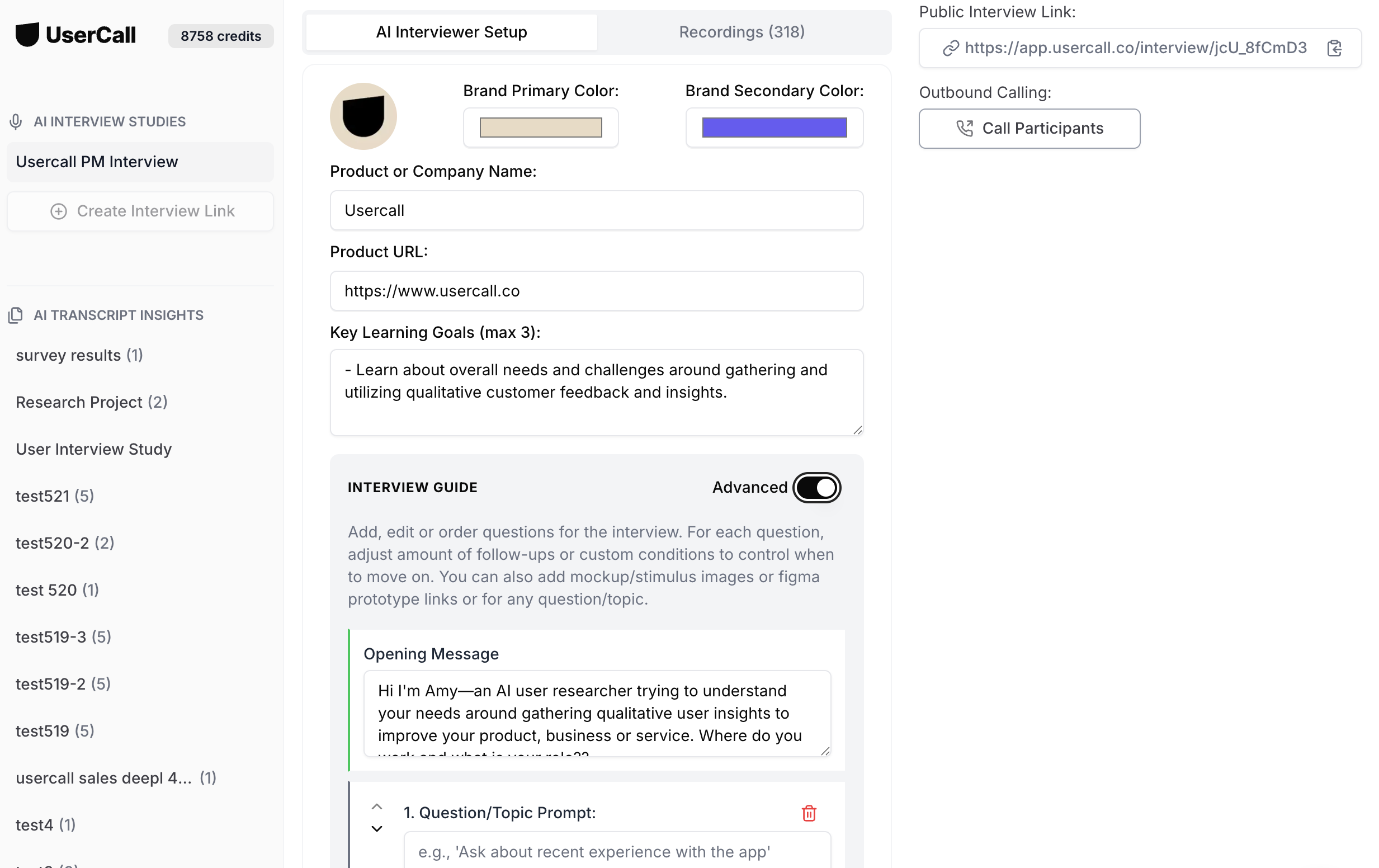
UserCall is built for teams that need qualitative depth without the overhead of scheduling, transcription, or manual coding.
It runs AI-moderated voice interviews asynchronously, then automatically generates transcripts, themes, sentiment, and insight summaries you can review and refine.
Why teams choose UserCall:
Limitations:
Less suited for strict academic coding protocols that require fully manual control.
Best for:
UX researchers, product teams, growth teams, and insight teams that need fast, repeatable qualitative insight at scale.
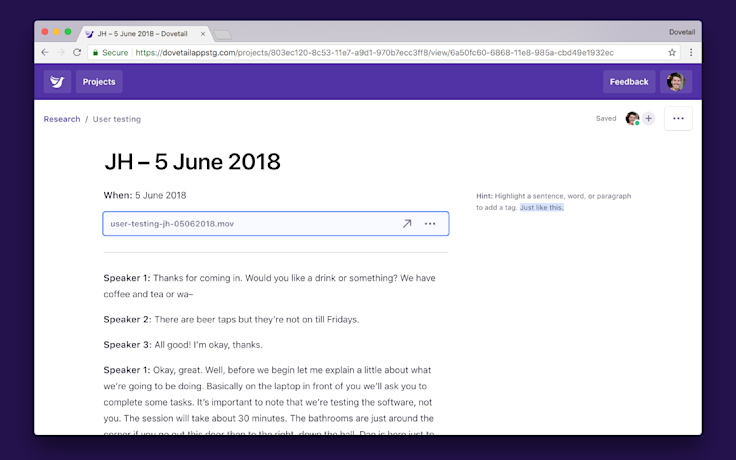
Dovetail centralizes interview notes, clips, and tags in one collaborative workspace. Its strength is organization—especially for large teams managing hundreds of research assets.
Why it stands out:
Best for: In-house research teams that want to manually analyze lots of qualitative interviews.
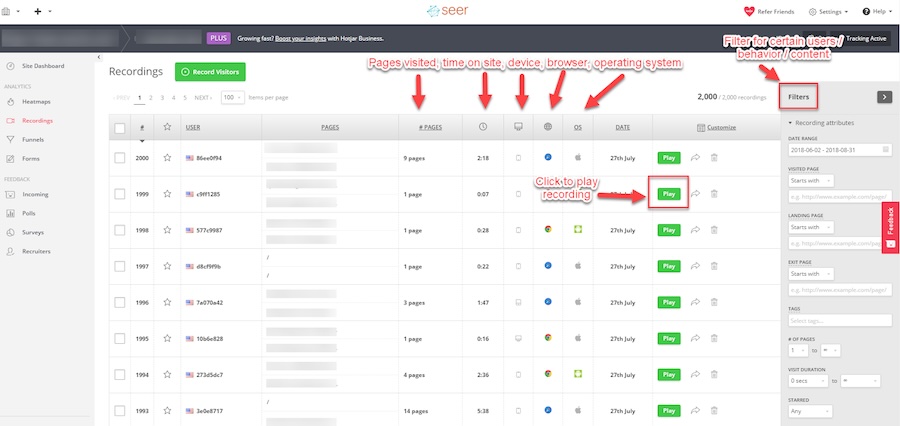
Hotjar combines heatmaps, session recordings, and on-page surveys to help you understand what users do and why they do it on your site.
Why it stands out:
Best for: Product managers and growth marketers improving UX and conversion funnels.
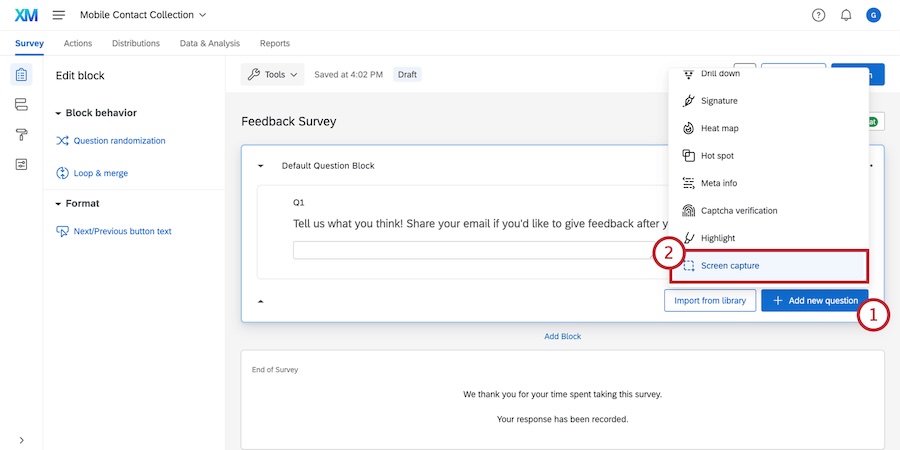
A leader in the experience management space, Qualtrics offers robust survey, analytics, and predictive intelligence tools—ideal for enterprise-scale insights.
Why it stands out:
Best for: Large organizations with complex, multi-segment research needs.
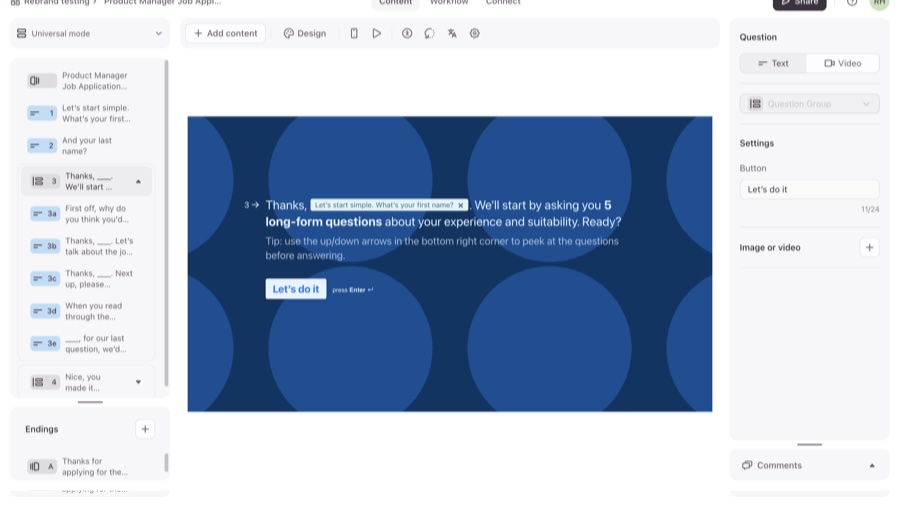
Typeform reimagines surveys with conversational flow and clean design that feels human. It’s perfect for collecting both quantitative and open-ended feedback.
Why it stands out:
Best for: Marketing and product teams running customer satisfaction or onboarding surveys.
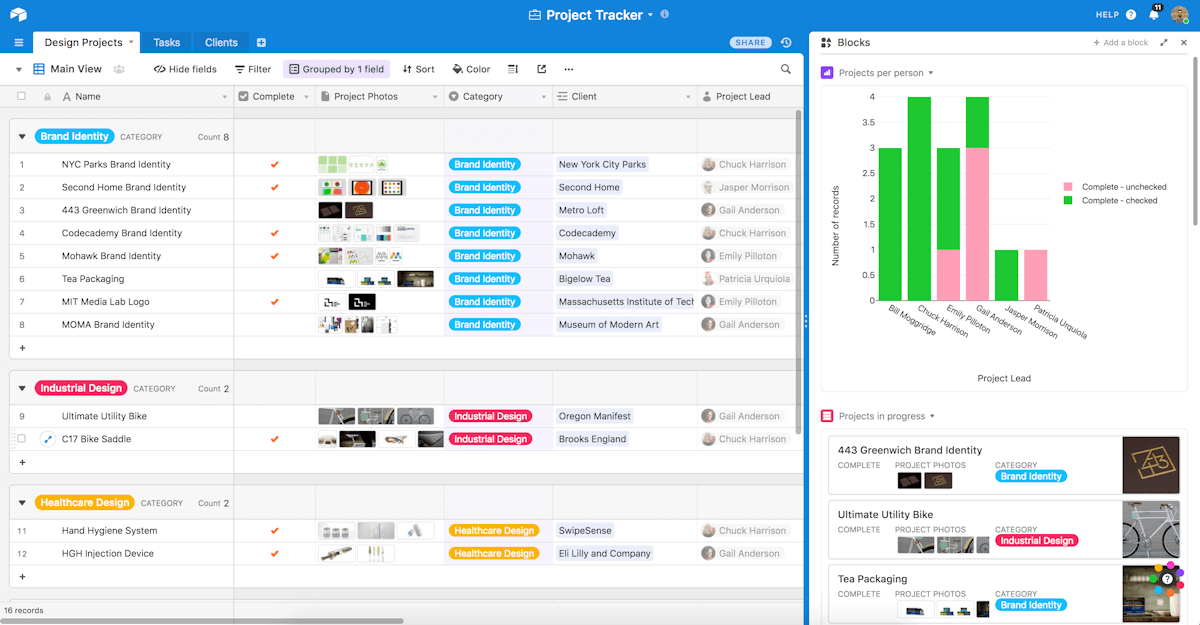
Think of Airtable as a hybrid between a spreadsheet and a database. Many research teams use it to organize user data, tag responses, and collaborate on insights.
Why it stands out:
Best for: Teams that want a customizable, visual database for research ops.
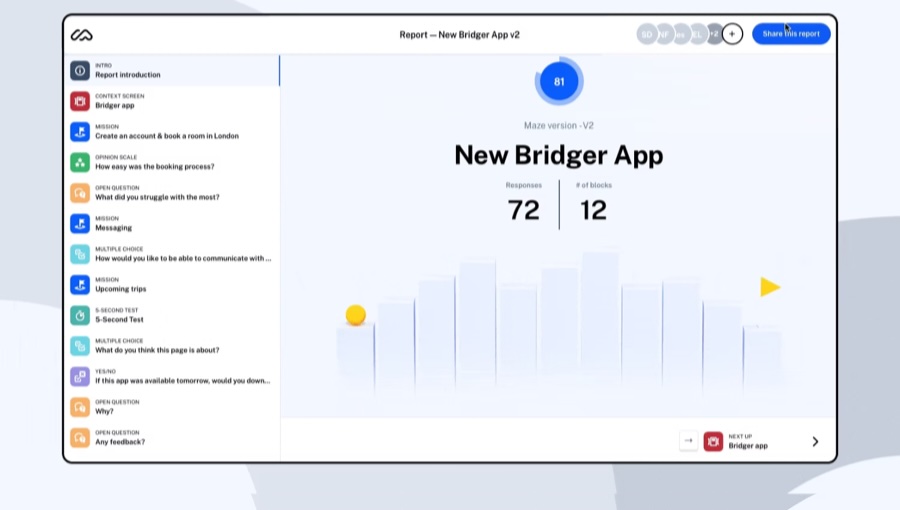
Maze turns design prototypes into instant user tests with actionable analytics.
Why it stands out:
Best for: UX designers and product teams running fast iterative tests.
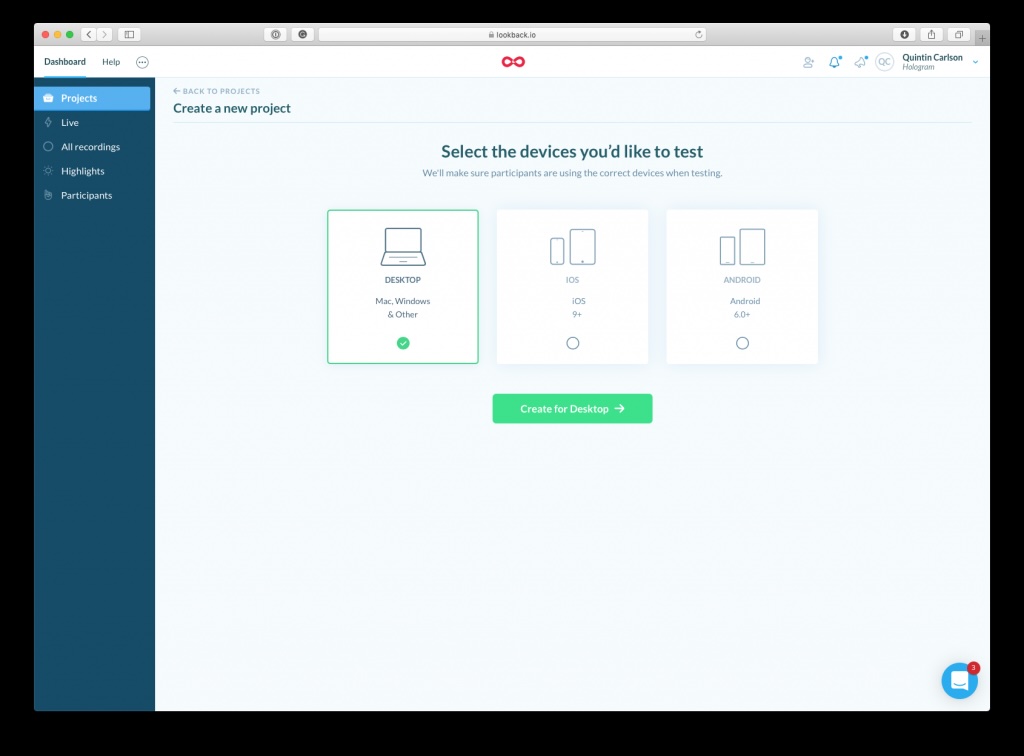
Lookback enables researchers to observe participants using products in real time, with features like session recording, note tagging, and team collaboration.
Why it stands out:
Best for: UX teams conducting moderated interviews and usability sessions.
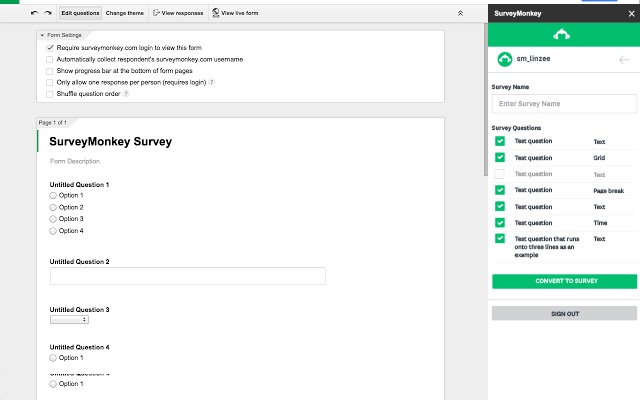
A trusted classic for surveys, SurveyMonkey offers broad reach, solid analytics, and easy templates for all types of customer research.
Why it stands out:
Best for: Teams running large-scale customer sentiment or brand awareness surveys.
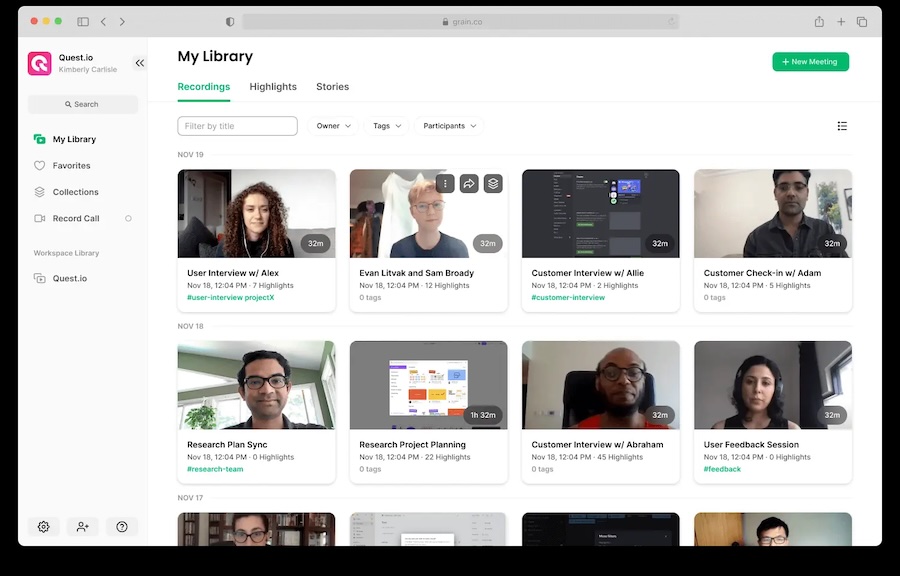
Grain captures Zoom, Teams, and Meet calls and automatically summarizes key moments, making it easy to build highlight reels or share customer quotes.
Why it stands out:
Best for: Sales, success, or product teams reviewing customer conversations.
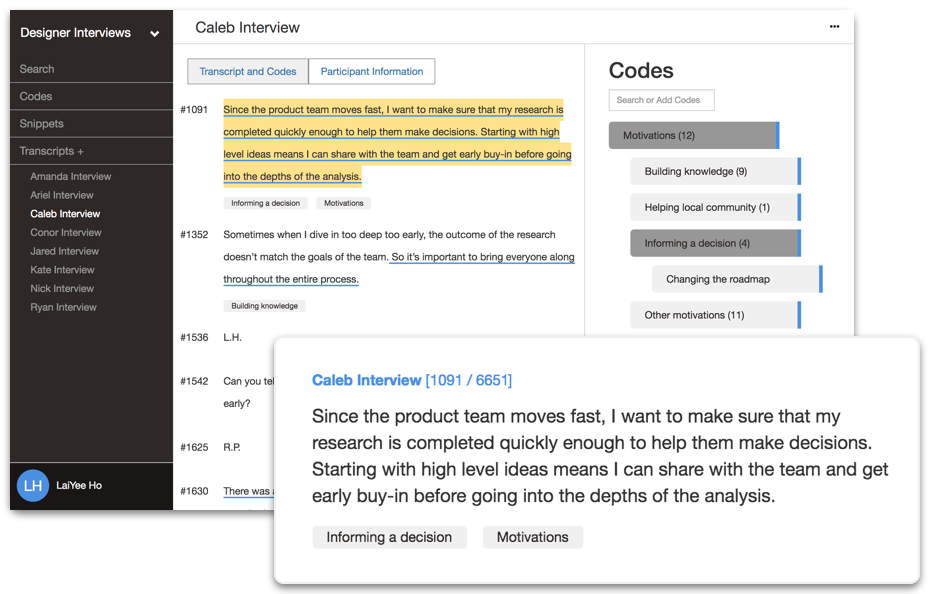
Delve provides a user-friendly platform for coding qualitative data—great for academic-style research or deep interview analysis.
Why it stands out:
Best for: Academic researchers or insight analysts focusing on text-based data.
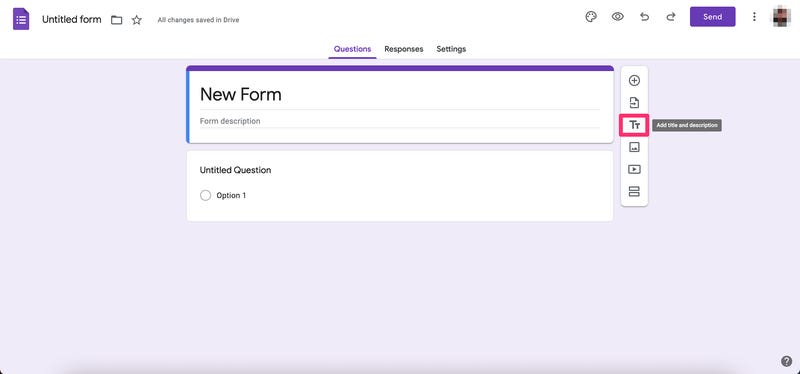
For scrappy teams, combining Google Forms with Sheets and Gemini (or ChatGPT) can deliver quick insights without expensive software.
Why it stands out:
Best for: Early-stage startups or teams experimenting with basic research.
Real-time customer feedback — insight captured at the moment of experience rather than days or weeks later — requires tools that combine low friction for respondents with fast AI-powered analysis for research teams. Here are the top AI tools for real-time customer feedback in 2026.
1. Usercall — Best for AI-moderated voice feedback at the moment of experience
Usercall enables asynchronous voice interviews participants can complete immediately after an interaction — purchase, onboarding, support call, or product trial. The AI moderator asks dynamic follow-up questions in real time, probing the reasoning behind responses. Themes, quotes, and insight summaries are ready within hours. Ideal for post-purchase, post-onboarding, or churn-exit feedback where you need the "why" fast.
2. Hotjar — Best for on-site micro-feedback at the moment of interaction
Hotjar's on-page polls and feedback widgets trigger at specific moments — after a user completes a task, attempts to exit, or reaches a key scroll depth. Responses feed directly into dashboards with no manual processing required.
3. Qualtrics XM — Best for enterprise-grade real-time NPS and CSAT
Qualtrics triggers automated survey workflows at transaction events (purchase, ticket close, onboarding complete) and uses predictive AI to flag at-risk customers before they churn. Strong for tracking satisfaction trends across large customer bases.
4. Typeform + AI integrations — Best for conversational real-time surveys
Typeform's question-by-question flow captures higher-quality open-ended responses than static surveys. Pair with Zapier or Make.com to route responses through AI summarization tools automatically as soon as they're submitted.
For most teams, the highest-leverage real-time feedback setup is: Usercall for qualitative depth on key moments (onboarding, churn, post-purchase) + Hotjar for always-on site feedback + one quantitative tool (Typeform or Qualtrics) for trend tracking.
| Tool | Best For | Key Strengths |
|---|---|---|
| Usercall | AI-moderated voice interviews | Automated analysis, fast setup, always-on insights |
| Dovetail | Qual data repository | Powerful tagging, visualization, collaboration |
| Hotjar | Website behavior feedback | Heatmaps, recordings, real-time polls |
| Qualtrics | Enterprise surveys | Advanced analytics, predictive AI, compliance |
| Typeform | Engaging surveys | Conversational UX, logic branching |
| Airtable | Research data organization | Custom schemas, automation |
| Maze | Prototype testing | Heatmaps, task success, analytics |
| Lookback | Live usability sessions | Moderated interviews, timestamped notes |
| SurveyMonkey | Mass surveys | Templates, analytics, respondent panel |
| Grain | Meeting insights | AI summaries, clips, CRM integration |
| Delve | Thematic coding | Manual + AI-assisted coding |
| Google Stack | Free basic research | Simple setup, AI automation |
They choose tools based on features instead of workflow.
They underestimate how much time manual coding actually costs.
They separate data collection from synthesis, slowing decisions.
They treat research as episodic instead of continuous.
The best tools in 2026 reduce friction at every step, from collecting feedback to sharing insights.
The best customer research software isn’t the one with the longest feature list. It’s the one that fits how fast your team needs answers.
If you’re still scheduling interviews, transcribing recordings, and manually coding responses, you’re paying in time what you save in software costs.
Modern teams combine AI-assisted qualitative tools, behavioral data, and targeted surveys into an always-on insight system that keeps them close to customers year-round.
Start small. Replace one survey or interview workflow with an AI-assisted alternative and compare the speed, depth, and clarity of the insights you get.
Once you've found the right tool, make sure your overall discovery process is just as sharp—the Product Discovery Ultimate Guide gives you the full framework. If you want to see AI-powered customer interviews in action without a lengthy procurement process, Usercall is free to try today.
Customer research software helps teams collect, organize, analyze, and activate insights from users or target customers. It bridges the gap between raw feedback and actionable strategy. In 2026, tools fall into three categories: qualitative research, quantitative surveys, and hybrid AI-native platforms that combine collection and analysis across text, voice, and feedback streams.
The top customer research software tools in 2026 include UserCall for AI-moderated interviews, Dovetail for research repositories, Hotjar for on-site behavior and feedback, Qualtrics for enterprise surveys, Maze for rapid UX testing, and Lookback for live moderated interviews. The best choice depends on your specific use case and team workflow.
Traditional customer research tools require manual scheduling, transcription, coding, and synthesis, making them slow and labor-intensive. AI-native tools run interviews asynchronously, automatically transcribe and code responses, and let researchers focus on interpreting insights. For most teams, this shift cuts analysis time by 60 to 80 percent.
Many leading customer research software platforms offer free trials or entry-level plans. Tools like Hotjar and Maze have free tiers for smaller teams or limited usage. AI-native platforms such as UserCall are designed for continuous discovery workflows, and most enterprise tools like Qualtrics operate on paid plans with demo options.
Traditional customer research software is slow and labor-intensive. Teams must manually schedule interviews, transcribe sessions, tag responses, and clean spreadsheets before any insight is usable. In 2026, this workflow is no longer sufficient for teams that need continuous feedback loops, fast analysis, and always-on customer understanding.
For qualitative analysis, AI-native tools like UserCall are best because they automate transcription, first-pass coding, and theme detection across interviews. Dovetail works well as a central research repository for organizing qualitative findings. These tools replace manual tagging workflows and significantly reduce the time between data collection and insight activation.
Teams should invest in dedicated customer research software when spreadsheets and scattered surveys can no longer support continuous feedback loops. If adoption is stalling, retention is slipping, or decisions are being made on assumptions rather than real data, purpose-built tools provide the workflow and automation needed to turn feedback into reliable insights.
If you want to see how these tools fit into a full research workflow, the 17 essential UX research tools organized by phase gives you a practical map from discovery through analysis. And if qualitative interviews at scale are on your list, Usercall runs AI-moderated calls that surface real insights without the scheduling overhead—worth a look before you commit to a stack.
For a broader comparison that spans interviews, testing, and analysis platforms, see our full ranking of the 12 best user research platforms in 2026. If real-time conversations with customers are part of how you validate insights, Usercall makes it easy to run and analyze those interviews at scale.
Related: 20 best customer research tools by category · top 10 user survey tools · AI tools for user research
