
 Table of Contents
When you’re evaluating qualitative analysis software, chances are you’ve come across Dedoose and NVivo—two of the most well-known names in the space. Both offer powerful ways to organize, code, and analyze qualitative data, but they were built with slightly different audiences in mind.
As a researcher who has worked with both tools over the years (sometimes painfully so), I can tell you that the choice isn’t as straightforward as reading the feature list. The way you actually work—your research workflow, your budget, your need for collaboration, even your tolerance for learning curves—will often determine which platform is the better fit. And increasingly, researchers are also considering modern AI-first tools like Usercall, which approach qualitative insights from a completely different angle: faster, more scalable interviews and automated analysis with full researcher customizations that cut down the hours of manual coding.
In this post, I’ll break down Dedoose vs NVivo in terms of usability, pricing, strengths, and limitations, then show how Usercall compares as a third option for teams that want speed and depth without the traditional overhead.
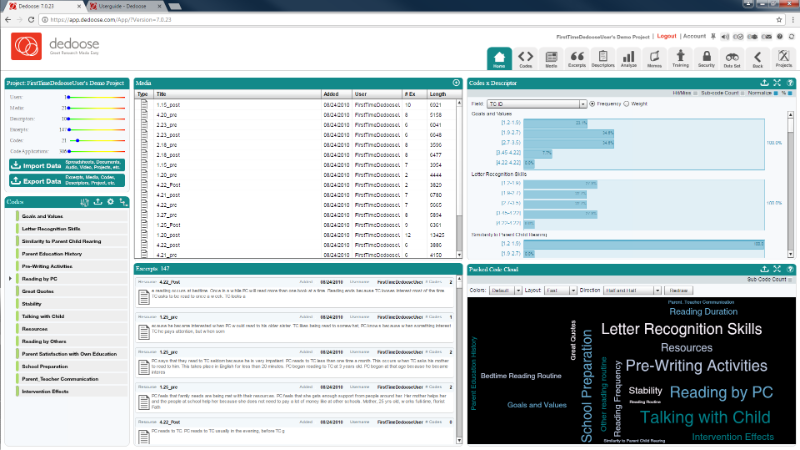
Dedoose is a cloud-based platform that emphasizes team collaboration. Because it’s browser-based, you don’t need heavy installs or high-end machines to run it.
Strengths:
Limitations:
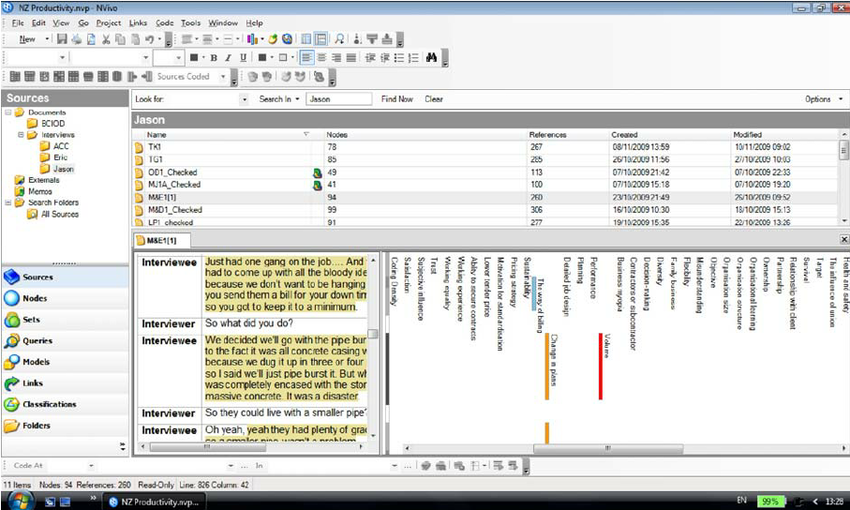
NVivo is often considered the industry standard for qualitative analysis, especially in academia and government projects. It’s feature-rich and supports advanced statistical integrations.
Strengths:
Limitations:
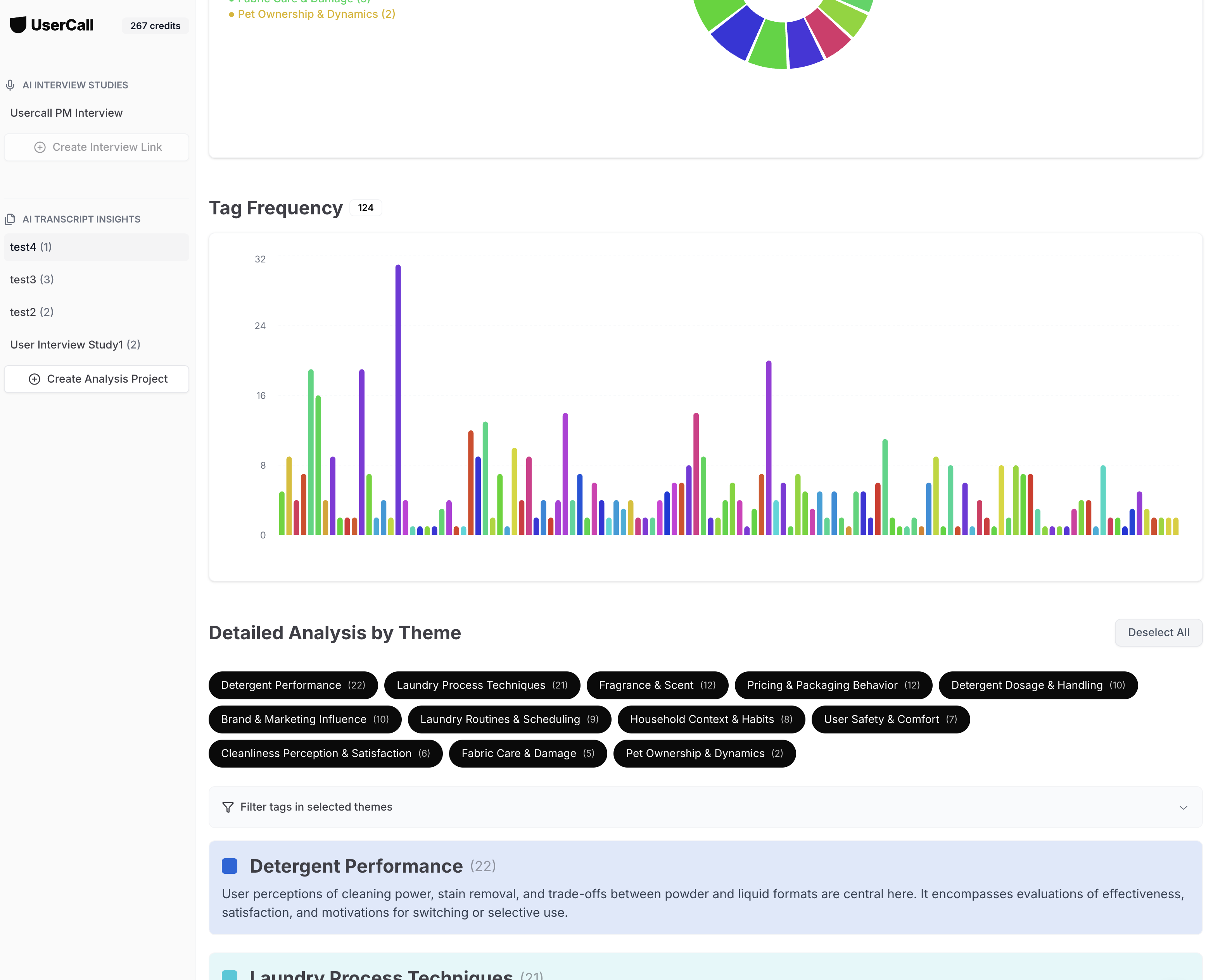
Usercall is built from the ground up for fast, AI-powered qualitative analysis. Unlike legacy tools that require tedious manual coding from imported transcripts, Usercall lets you upload raw qual data—or even run AI-moderated interviews—and instantly get structured themes, tagged quotes, and insight-rich summaries. It’s designed to help modern teams focus on meaning and decision-making, not mechanics.
Strengths:
Limitations:
| Tool | Strengths | Limitations | Pricing | Best For |
|---|---|---|---|---|
| Dedoose |
|
| ~$15–$25 per user/month | Teams on a budget needing collaboration in the cloud |
| NVivo |
|
| $253+/year per license | Academics and institutions with complex qualitative projects |
| Usercall |
|
| $99–199/month (flat rate) | Product, UX, and marketing teams needing fast insights at scale |
| Feature | Dedoose | NVivo |
|---|---|---|
| Platform | Web-based (browser only) | Desktop (Windows/Mac) |
| Coding tools | Manual tagging, code weighting, excerpt management | Node hierarchies, matrix queries, pattern-based auto-coding |
| Collaboration | Real-time multi-user, built-in | Limited — file sharing or NVivo Server required |
| AI features | None meaningful | Basic rule-based auto-coding only |
| Mixed methods | Strong — purpose-built for qual + quant integration | Supported, but more complex to configure |
| Learning curve | Moderate — browser UI, but dated | Steep — formal training often required |
| Offline support | No — requires internet | Yes — fully local |
| Pricing | ~$15–25/user/month | $253+/year per license |
No — not in any meaningful sense. Dedoose was built before AI-assisted coding became viable and has not made significant investments in that direction. Coding in Dedoose is manual: you read excerpts, apply codes by hand, and manage your codebook yourself.
Later versions mention limited "AI assistance," but in practice this amounts to basic text search and suggested codes — not automated thematic synthesis or pattern detection. If AI-powered analysis is a requirement, Dedoose is not the right tool.
NVivo's "Auto Code" is only marginally better. It applies existing codes based on text patterns — rule-based matching that works best on structured data like survey responses. Neither tool offers the kind of real-time synthesis or insight generation that modern AI-native platforms now provide.
The right choice comes down to your research context, team structure, and budget.
Want the full picture before you decide? Read our deep comparison of ATLAS.ti, NVivo, and UserCall to see how these tools hold up across more use cases—or try UserCall free and see how fast AI-assisted qualitative analysis can move.
Dedoose and NVivo each have their tradeoffs, but they're not your only options. For a broader view of what's actually working for research teams right now, read our roundup of the 5 qualitative data analysis tools that actually work — and try Usercall if you want AI-powered analysis without sacrificing collaboration or rigor.
Related: Atlas.ti vs Dedoose vs Usercall comparison · 7 best NVivo alternatives for qualitative research · what teams underestimate when switching from NVivo
